


“Texting thumb” or De Quervain’s tenosynovitis often happens when you strain your wrist too much. The first extensor tendon sheath around your thumb can swell, leading to pain in your thumb joint that might spread to your forearm. This pain often shows up when you’re using your thumb or spreading it out. Using CureTape can provide support and ease the strain on the tendon and thumb movements. If you’re experiencing discomfort, it’s a good idea to consult a doctor or therapist. Additionally, the tape can help with general overuse injuries of the thumb joint or due to osteoarthritis.
Get started with these items to tape your thumb
-

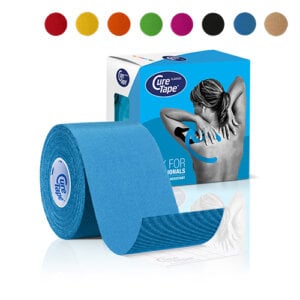
CureTape® Classic 2″ kinesiology tape
$12.95In stockSelect options This product has multiple variants. The options may be chosen on the product page -
Bestseller
CureTape® Art – 3 Rolls Kinesiology Tape
$18.95In stockSelect options This product has multiple variants. The options may be chosen on the product page -
CureTape® Classic kinesiology tape 0.5″ (5 rolls)
$19.95In stockSelect options This product has multiple variants. The options may be chosen on the product page -
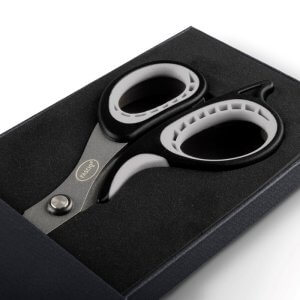
FASCIQ® High Quality Scissor
$20.00Out of stockRead more



Expert tip
Christina’s advice for taping your hand
“When you’re taping your hand, cutting strips of tape can take up a lot of time. That’s why CureTape introduced a smaller roll, perfect for taping your thumb or finger. Alternatively, you can use the CureTape kinesiology tape cutter to easily cut strips from a regular roll.”
Christina Peter · Sports Physical Therapist and Tape Instructor for CureTape since 2003
How to tape a painful thumb
Tips for effective hand taping
- Make sure you understand what’s causing the pain or discomfort.
- Check if there are any reasons why taping might not be a good idea.
- Before you start, read the instructions carefully.
- Choose a tape color or print that suits your style!
- Round off all the edges to prevent peeling.
- Avoid stretching the tape at the beginning and end.
- Rub the tape firmly for better adhesion; warmth helps activate the adhesive.
- You can shower or swim with the tape on; just pat it dry gently afterward, avoiding vigorous rubbing.
- To remove the tape easily, use body oil or massage oil.
Preparation for taping a painful thumb
Tape
- Shape: Y-tape
- Number of strips: 2
- Technique: Muscle technique (slight pull)
Measuring and cutting the tape
Step 1:

- Sit at a table and measure two tapes from the thumb to the middle of the forearm..
- Cut the tape at one end to create a Y-tape that fits around the thumb.
Applying the tape
Step 1:

Step 2:

Step 3:

Step 4:

Step 5:

Step 6:

- First apply both sides of the Y-tape and end with a slight stretch around the thumb. Rub them into place.
- After you have fixed the base, spread the thumb a little and apply the tape with a slight stretch over the root of the thumb and over the wrist in an extension of the thumb.
- Rub the tape well to improve adhesion.
- Repeat the application technique with the second tape, guiding the tape diagonally from the first tape, across the back of the hand to the forearm.
Learn how to tape
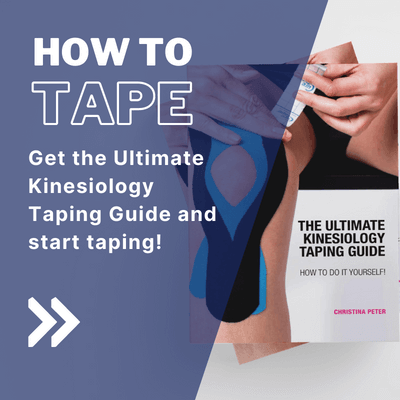
Want to learn how to apply tape yourself*? We have created the ultimate guide for that! This helpful guide contains:
- 30 taping instructions for common injuries that taping can help with
- 176 pages of clear written instructions
- 200 step-by-step instructions with photos, illustrations, and videos you can scan with QR codes
What are you waiting for? Order your copy today!
*This book is intended for people who want to tape an injury or complaint themselves. If you are unsure about the cause of your complaint, consult a physical therapist.

Who are we?
THYSOL is the manufacturer of the kinesiology tape brand CureTape. As CureTape, we have been training and supplying professionals for almost 25 years. And consumers now know how to find us too! Because we manufacture all our tapes in our own factory, we can guarantee the best quality!
Disclaimer
Please note that the tape applications and information on our website about the possibilities of kinesiology tape have not yet been scientifically proven. The statements and examples are based on the long-term experience of patients and trained therapists.
Do not tape in case of: pregnancy, open wounds, broken bones, unexplained complaints, allergies and skin conditions, use of medication such as blood thinners, thrombosis, or fever. Always apply tape in consultation with a specialist.