


Scars can be both unsightly and uncomfortable, sometimes restricting movement or causing pain. It’s crucial to address them early on to prevent potential issues. Whether the scar is fresh or older, using tape can make a significant difference. By lifting the skin and underlying tissue, the tape helps mobilize the area with each movement, making the affected tissue feel more flexible and mobile. However, it’s important to avoid taping over open wounds.
Additionally, this CureTape taping technique can also be beneficial for bruises or hematomas. Applying CureTape shortly after experiencing a bruise can help alleviate pain and accelerate the healing process. The pressure difference created by the tape promotes blood circulation, resulting in faster recovery from the bruise.
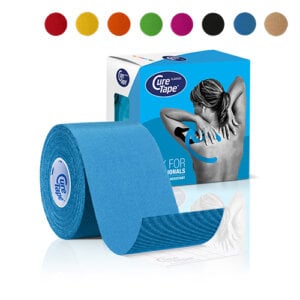
Get started with these items to tape your scars
-

CureTape® Gentle – Kinesiology Tape for sensitive skin
$13.95In stockAdd to cart -
CureTape® Classic 2″ kinesiology tape
$12.95In stockSelect options This product has multiple variants. The options may be chosen on the product page -
Bestseller
CureTape® Art – 3 Rolls Kinesiology Tape
$18.95In stockSelect options This product has multiple variants. The options may be chosen on the product page



Expert tip
Christina’s advice for taping scars
“Scar taping can be a valuable technique for improving the appearance and mobility of scars. It’s important to carefully assess each scar, identify any restrictions in movement, and apply the tape accordingly. Remember to change the tape daily for optimal results and educate yourself or your patients on how to perform taping at home for continued care.”
Christina Peter · Sports Physical Therapist and Tape Instructor for CureTape since 2003
How to tape scars and bruises
Tips for effective scar taping
- Understand and evaluate the scar’s characteristics.
- Identify any limitations in movement caused by the scar.
- Before you start, read the instructions carefully.
- Choose a tape color or print that suits your style!
- Round off all the edges to prevent peeling.
- Apply the tape against these restrictions or in the opposite direction of where the scar naturally wants to go, using 75-100% tension on the tape.
- Rub the tape firmly for better adhesion; warmth helps activate the adhesive.
- Change the tape daily to ensure effectiveness.
- To remove the tape easily, use body oil or massage oil.
Preparation for taping scars and bruises
Tape
- Shape: I-tape
- Number of strips: Depends on the size of the scar or bruise
- Technique: Ligament technique (maximum/full stretch)
Measuring and cutting the tape
Step 1:
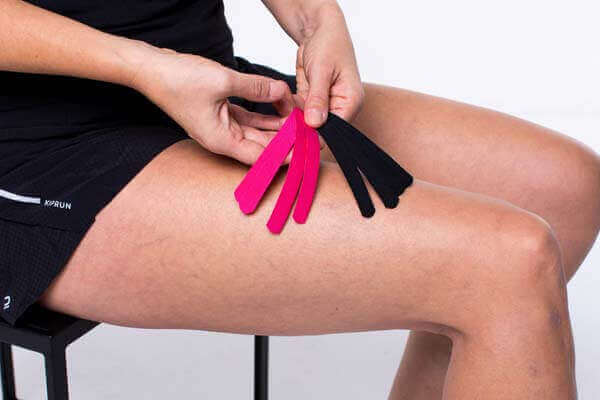
- Measure the tapes according to the length of the scar or the size of the bruise.
- Cut the 5 cm (2 in) wide tape three times lengthwise, so that you get four equal, narrow strips.
Applying the tape on scars or bruises
Step 1:
Step 2:
Step 3:
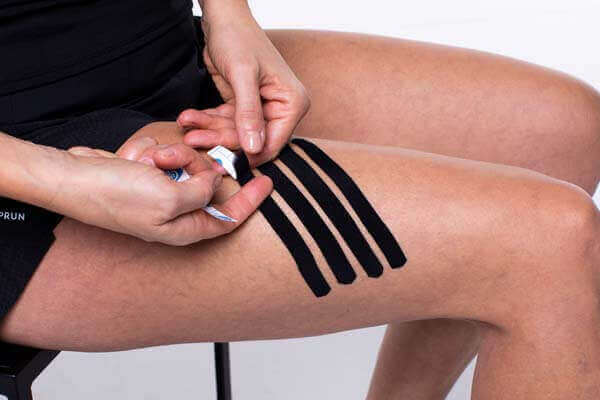
Step 4:
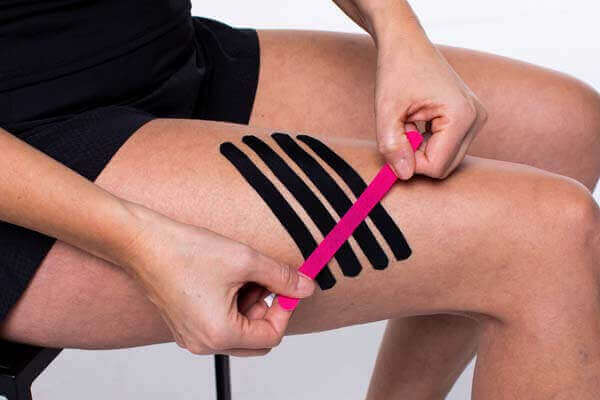
Step 5:
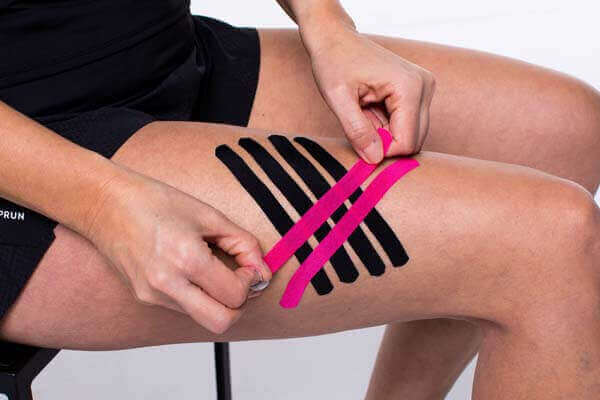
Step 6:
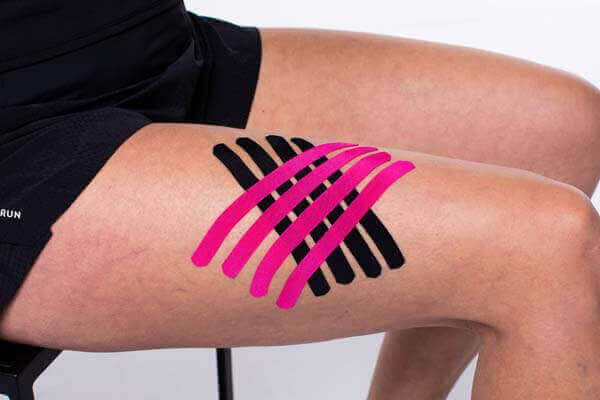
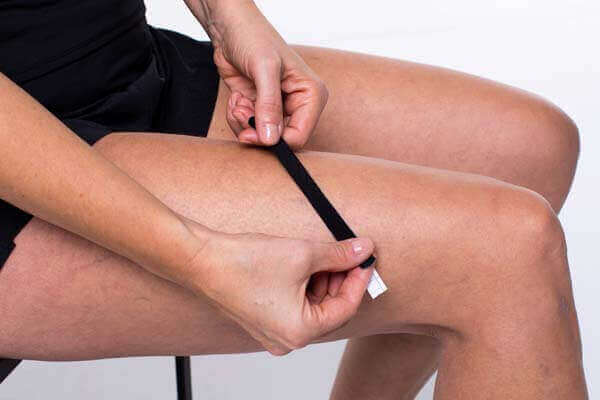
- Tear the backing paper in the middle, fold it to the right and left, and stretch the middle part of the tape to the maximum.
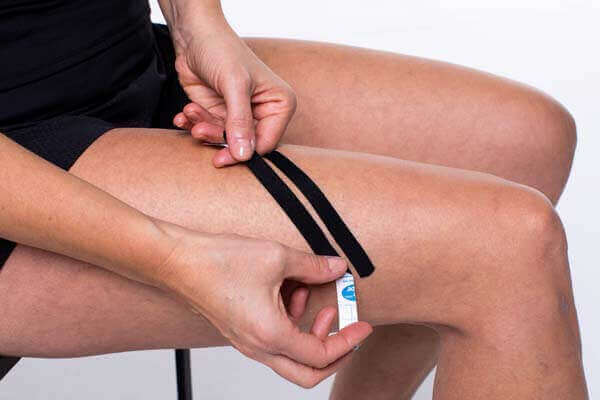
- Place the tape at a 45 degree angle to the direction of the scar or the part of the body to be treated.
- Carefully place the two anchors without stretching and rub the tape on.
- At a distance of approx. 1 cm (0.4 in), repeat the application with the other strips of tape until the entire scar or bruise is covered.
- Then place more tapes, also at a 45 degree angle, now at full stretch and in the opposite direction. The tapes must cross each other exactly in the middle of the scar or bruise.
- You will need as many tapes as necessary until the area to be treated is completely covered. Rub the tapes well to ensure good adhesion.
Learn how to tape
Want to learn how to apply tape yourself*? We have created the ultimate guide for that! This helpful guide contains:
- 30 taping instructions for common injuries that taping can help with
- 176 pages of clear written instructions
- 200 step-by-step instructions with photos, illustrations, and videos you can scan with QR codes
What are you waiting for? Order your copy today!
*This book is intended for people who want to tape an injury or complaint themselves. If you are unsure about the cause of your complaint, consult a physical therapist.



Who are we?
THYSOL is the manufacturer of the kinesiology tape brand CureTape. As CureTape, we have been training and supplying professionals for almost 25 years. And consumers now know how to find us too! Because we manufacture all our tapes in our own factory, we can guarantee the best quality!
Disclaimer
Please note that the tape applications and information on our website about the possibilities of kinesiology tape have not yet been scientifically proven. The statements and examples are based on the long-term experience of patients and trained therapists.
Do not tape in case of: pregnancy, open wounds, broken bones, unexplained complaints, allergies and skin conditions, use of medication such as blood thinners, thrombosis, or fever. Always apply tape in consultation with a specialist.